Route Key: OpenAI-compatible AI API gateway
Route every request.
OpenAI-compatible AI API gateway
Swap the endpoint, keep the workflow
Quickstart
Use one API key with OpenAI-compatible request formats.
Use Route Key with coding agentsCodex · Claude Code · Gemini CLI · CursorConfigure agentsShift away from expensive or unhealthy routes without changing application code.
Keep SSE-style responses alive while the gateway selects a healthy channel.
Less provider drift, cleaner traffic control
curl https://api.routekey.ai/v1/chat/completions \
  -H "Authorization: Bearer sk-route-key" \
  -H "Content-Type: application/json" \
  -d '{
    "model": "gpt-4o-mini",
    "routing": {
      "policy": "cost_latency_health",
      "fallback": ["deepseek-chat", "gemini-1.5-pro"]
    },
    "stream": true,
    "messages": [
      { "role": "user", "content": "Route this by cost and latency." }
    ]
  }'
Questions before requests enter the gateway
01What is Route Key, and which models can it connect?
Route Key is an OpenAI-compatible AI API gateway and routing control plane. It exposes the models enabled in the current catalog, including GPT, Claude, Gemini, DeepSeek, Qwen, and compatible custom channels. Open the Models page to compare vendor, context length, endpoint support, group availability, and the exact model ID before sending production traffic.
02Is Route Key compatible with the OpenAI SDK and APIs?
Usually yes. Most integrations keep the familiar OpenAI request body and SDK code: replace the base URL with the Route Key compatible endpoint, set a Route Key API key, and choose a supported model ID. Test a short non-streaming request first, then add streaming, tools, or longer context after the response and usage log look correct.
03How does Route Key route requests and control AI API costs?
The gateway evaluates available routes using configured group ratios, input and output token prices, cache settings, latency, and health. You can pin a model when consistency matters or let policy choose a healthy lower-cost route. Compare the selected model, tokens, group, and cost in Usage Logs so savings are measurable rather than assumed.
04Can I monitor API usage, costs, and request logs?
Yes. API keys are masked in the console, while Dashboard usage logs provide account visibility into request status, selected model, cost, input and output token counts, latency, and timestamps, subject to configured privacy controls. Use separate keys for applications or coding agents so access can be rotated and usage can be attributed cleanly.
05Does Route Key support failover and streaming responses?
Route selection happens before dispatch, so the gateway can avoid an unhealthy or unavailable channel before your request is sent. For streaming endpoints, Route Key retains SSE-style responses while selecting a healthy route. Check latency and error records after rollout, and configure a fallback policy for provider incidents instead of retrying blindly in every client.
06How do I start using Route Key in production?
Create a dedicated API key in the Dashboard, point your SDK to the Route Key compatible endpoint, select an exact model ID, and send a small test request. Confirm the response, quota, endpoint, token usage, latency, and cost in Usage Logs. Then add streaming, concurrency, retries, and fallback rules one at a time so a provider change is observable and reversible.
Route every request.
Use one API key and compatible gateway to compare AI model cost, then steer GPT, Claude, Gemini, DeepSeek, Qwen, and custom channels.
Swap the endpoint, keep the workflow
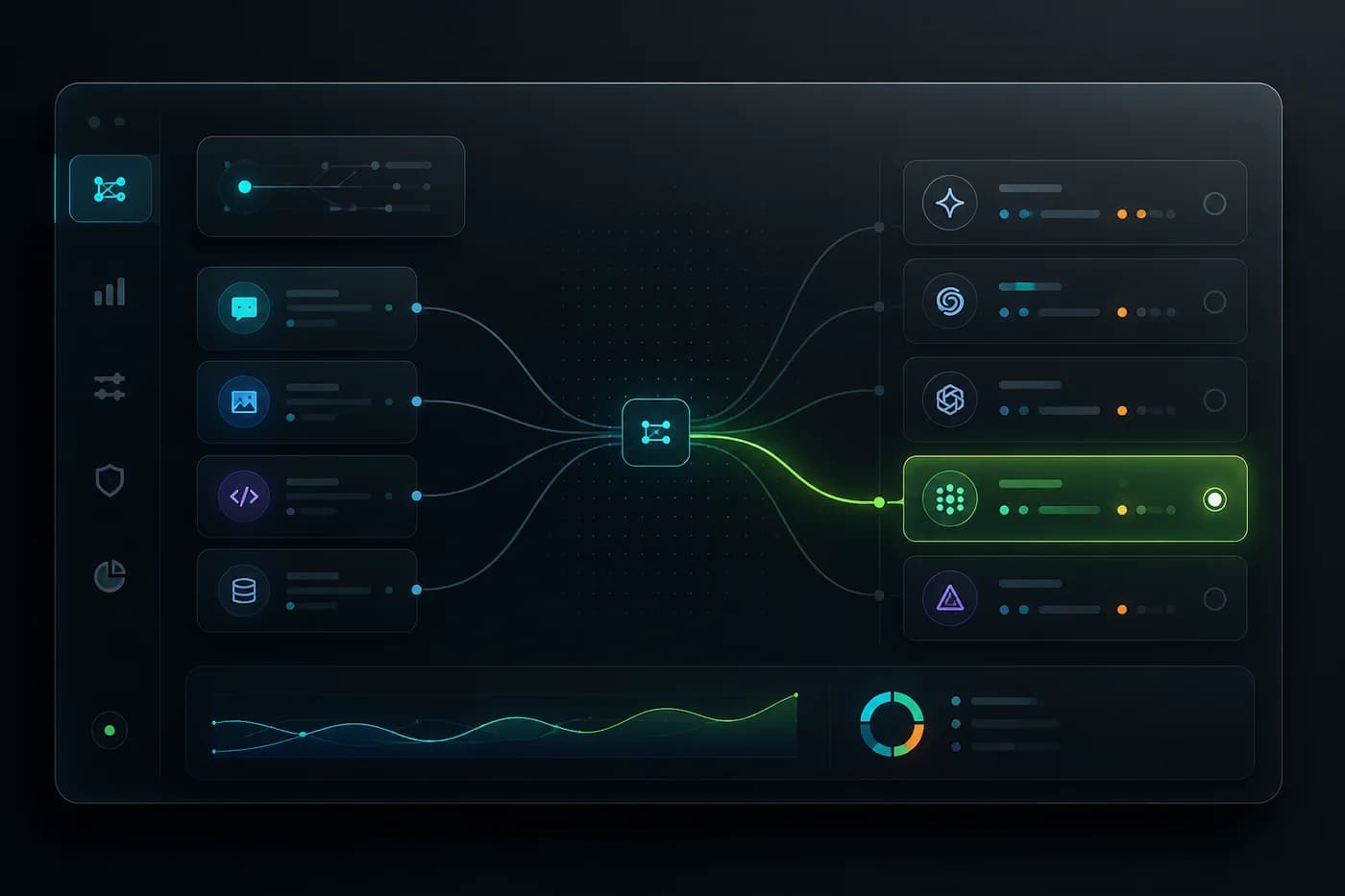
Route Key separates application code from provider sprawl: one API key, one compatible entry point, live model pricing, policy dispatch, masked keys, streaming continuity, and usage telemetry.
curl /v1/chat/completions \
  -H "Authorization: Bearer sk-route-key" \
-d '{"model":"gpt-4o-mini","stream":true}'Requests enter once. Policy chooses the best route.
SDKs keep their request shape while Route Key resolves catalog metadata, channel pricing, streaming continuity, and failover posture behind the gateway.
Questions before requests enter the gateway
01What is Route Key, and which models can it connect?
Route Key is an OpenAI-compatible AI API gateway and routing control plane. It exposes the models enabled in the current catalog, including GPT, Claude, Gemini, DeepSeek, Qwen, and compatible custom channels. Open the Models page to compare vendor, context length, endpoint support, group availability, and the exact model ID before sending production traffic.
02Is Route Key compatible with the OpenAI SDK and APIs?
Usually yes. Most integrations keep the familiar OpenAI request body and SDK code: replace the base URL with the Route Key compatible endpoint, set a Route Key API key, and choose a supported model ID. Test a short non-streaming request first, then add streaming, tools, or longer context after the response and usage log look correct.
03How does Route Key route requests and control AI API costs?
The gateway evaluates available routes using configured group ratios, input and output token prices, cache settings, latency, and health. You can pin a model when consistency matters or let policy choose a healthy lower-cost route. Compare the selected model, tokens, group, and cost in Usage Logs so savings are measurable rather than assumed.
04Can I monitor API usage, costs, and request logs?
Yes. API keys are masked in the console, while Dashboard usage logs provide account visibility into request status, selected model, cost, input and output token counts, latency, and timestamps, subject to configured privacy controls. Use separate keys for applications or coding agents so access can be rotated and usage can be attributed cleanly.
05Does Route Key support failover and streaming responses?
Route selection happens before dispatch, so the gateway can avoid an unhealthy or unavailable channel before your request is sent. For streaming endpoints, Route Key retains SSE-style responses while selecting a healthy route. Check latency and error records after rollout, and configure a fallback policy for provider incidents instead of retrying blindly in every client.
06How do I start using Route Key in production?
Create a dedicated API key in the Dashboard, point your SDK to the Route Key compatible endpoint, select an exact model ID, and send a small test request. Confirm the response, quota, endpoint, token usage, latency, and cost in Usage Logs. Then add streaming, concurrency, retries, and fallback rules one at a time so a provider change is observable and reversible.